

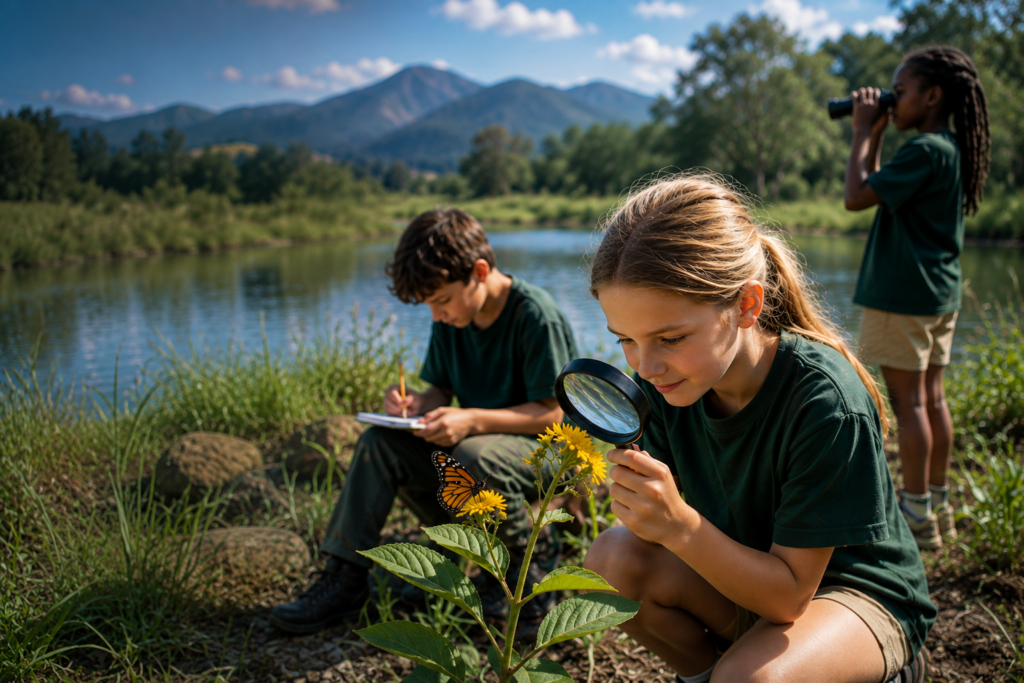
Where faith, science and stewardship come together
Helping young people explore God’s extraordinary creation, understand the science of the living world, discern wisely, care deeply and turn learning into positive action.
Foundation – Year 9 | Christian Schools • Churches • Homeschool Communities
The natural world is more than something to learn about.
It is something to wonder at, understand, value and care for.
The Kids for Conservation Christian Education Edition invites young people to explore the extraordinary workings of the natural world through scientific investigation and Christian faith — discovering the connections between wildlife, ecosystems, people and our shared future.
Students are encouraged to look closely, ask questions, investigate evidence and think deeply, while exploring what Scripture teaches us about stewardship, compassion, wisdom, justice and responsibility.
Because caring for creation is not simply
something we believe.
It is something we live.
SCIENCE IS NOT REPLACED.
IT IS EXPLORED WITH PURPOSE.
Kids for Conservation Christian Education Edition retains the scientific investigation, ecological understanding and critical thinking at the heart of the wider Kids for Conservation program.
Students explore wildlife, habitats, ecosystems, biodiversity, adaptation, environmental change and conservation challenges through observation, questioning, evidence and investigation.
Christian faith provides an additional lens through which students can consider what that knowledge means — exploring ideas of stewardship, responsibility, compassion, wisdom and our relationship with the living world.
Students are encouraged not only to ask “How does the natural world work?” but also “What responsibility do we have toward it?”
FAITH DOES NOT REMOVE THE QUESTIONS.
It gives students another place from which to explore them.
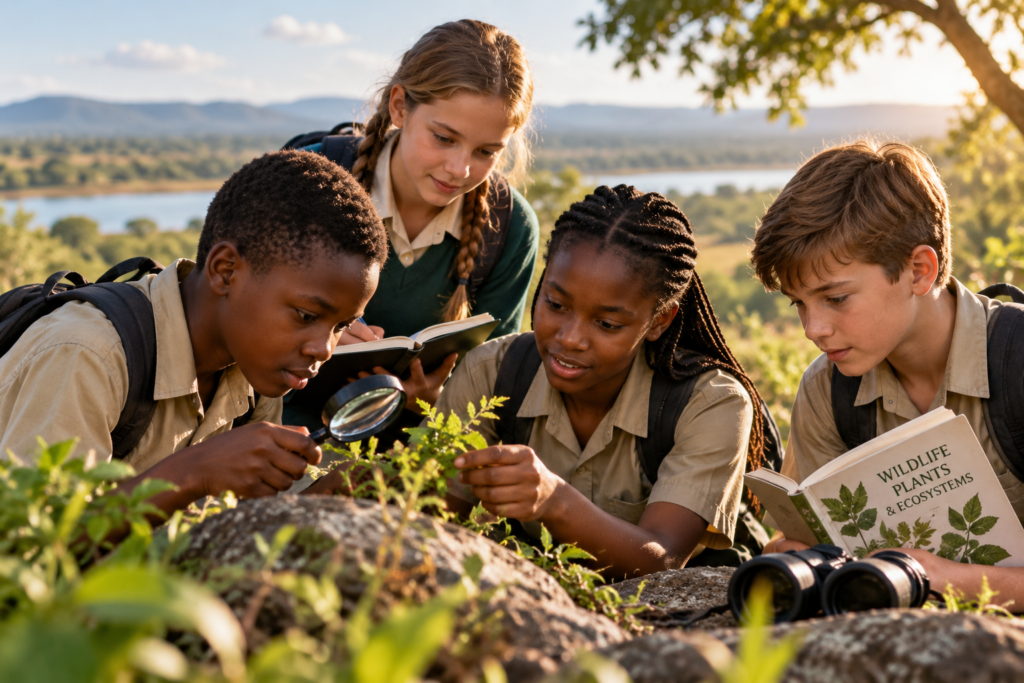
CREATION is His gift
STEWARDSHIP is our responsibility
LOVE is our calling
ACTION is our response
Kids for Conservation helps young people move from wonder to understanding, understanding to responsibility, and responsibility to action.
“The earth is the Lord’s, and everything in it.”
Psalm 24:1
WHY CHRISTIAN CONSERVATION EDUCATION?
To care for creation, we first need to understand it
They notice the tiny insect beneath a leaf. They wonder why birds migrate, how an elephant changes a landscape, why some flowers depend upon particular pollinators, or what happens when an animal disappears from an ecosystem.
These questions are the beginning of something important.
For Christian students, they also provide an opportunity to explore the natural world through both scientific understanding and Christian faith — learning not only how creation works, but why it matters and what responsibility we have toward it.
UNDERSTANDING DEEPENS RESPONSIBILITY.
The more closely we look at creation, the more clearly we begin to see our place within it.
Caring for creation means caring for people too.
Conservation is rarely only about wildlife.
The choices we make about land, water, food, energy and natural resources can affect animals, ecosystems, families and entire communities.
This gives students an opportunity to explore conservation not simply as a question of “How do we protect nature?”, but also:
Who is affected?
What do different people need?
What does the evidence tell us?
What responsibilities do we have?
What might a wise and compassionate response look like?
Christian conservation education creates space for students to consider these questions through science, Scripture, empathy and discernment — recognising that responsible stewardship asks us to consider both the living world and the people who share it.
Students are encouraged to investigate evidence, listen to different perspectives, consider Scripture and think carefully about solutions that demonstrate both stewardship of creation and love for our neighbour.
GOOD STEWARDSHIP DOES NOT ASK US TO CHOOSE BETWEEN PEOPLE AND NATURE.
It asks us to seek ways for both to flourish.
LOOK CLOSER. ASK WHY. DISCOVER MORE.
Faith should not be the end of a question. It can be the beginning of a deeper one.
Kids for Conservation encourages young people to remain curious — to observe carefully, investigate evidence, ask difficult questions and recognise that conservation challenges may be more complex than they first appear.
Christian faith adds another dimension to that curiosity. Students are encouraged to consider not only what is happening and why, but what their growing understanding might ask of them.
What do I know?
What do I still need to understand?
What responsibility might come with what I have learned?
Better questions can lead to deeper understanding — and wiser choices.
KNOWLEDGE • HOPE • ACTION
Conservation education should build understanding without taking away hope.
Young people will encounter difficult realities — wildlife under pressure, habitats changing, species declining and communities facing complex environmental challenges.
Kids for Conservation does not ignore those realities. Students are encouraged to understand the science, investigate the causes and consider the consequences.
But understanding a problem should also help students recognise where change is possible.
KNOWLEDGE
Helps us understand what is happening
HOPE
Helps us believe that change is possible
ACTION
Gives us a way to participate in that change
KIDS FOR CONSERVATION DOES NOT EDUCATE YOUNG PEOPLE TO FEAR THE FUTURE.
IT EQUIPS THEM TO HELP SHAPE IT.
Hope is not looking away from the problem. It is choosing to believe that what we do next can matter.
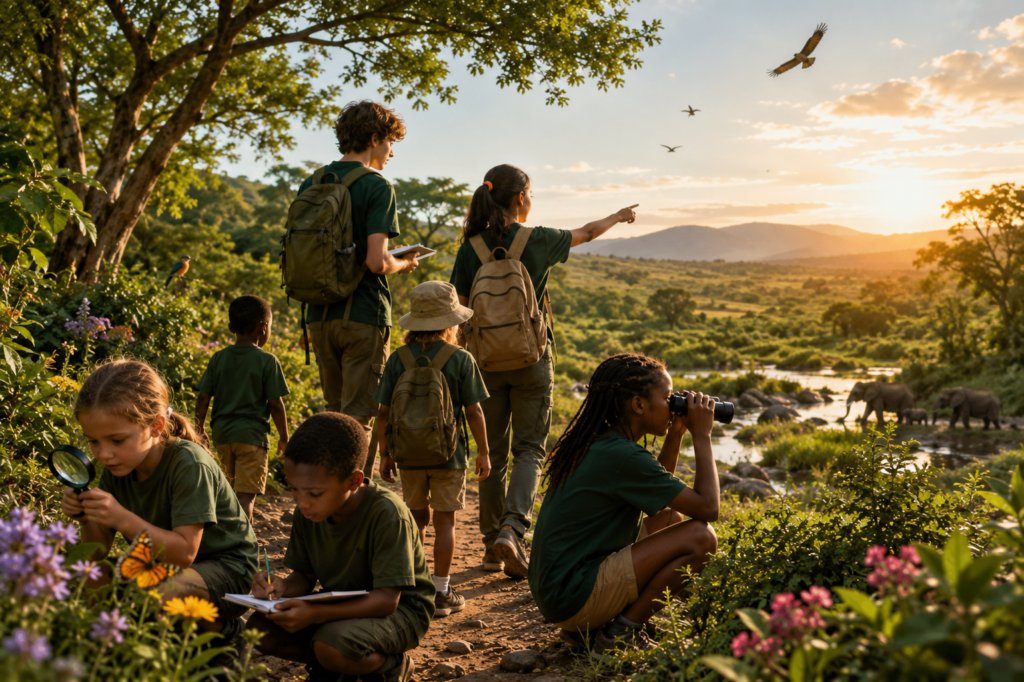
FROM EXPLORER TO CHANGEMAKER
The learning grows as the student grows.
Kids for Conservation Christian Education Edition follows three age-appropriate learning pathways. As students progress, they move from discovering and wondering about the natural world to investigating evidence, discerning responsibility and developing ideas for meaningful action.
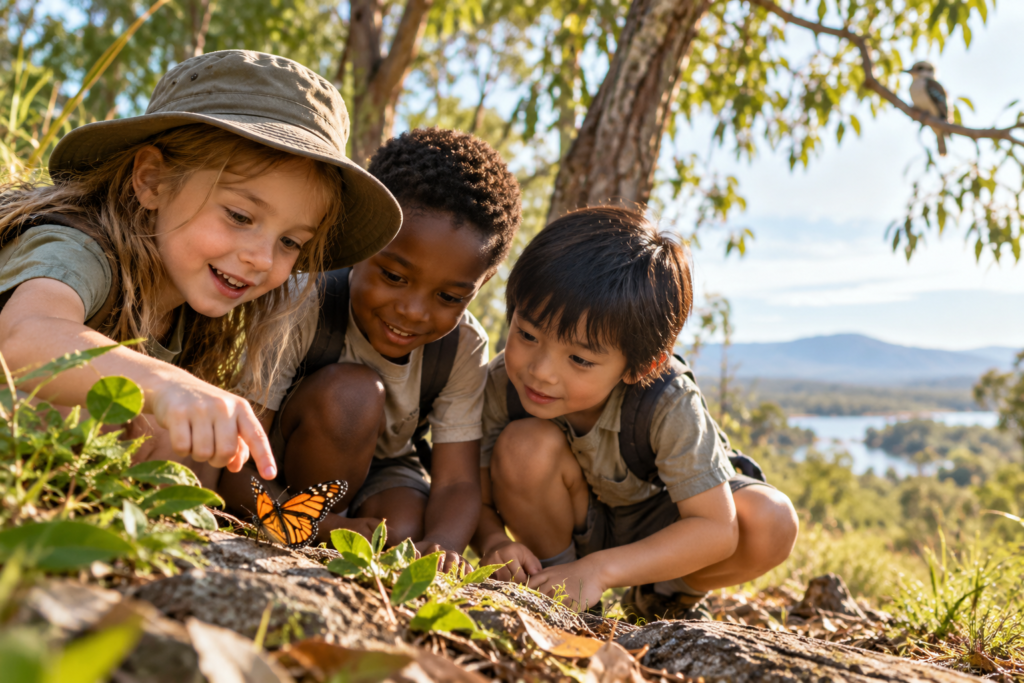
JUNIOR CONSERVATION EXPLORERS
Foundation – Year 2
Young learners begin with wonder, discovery and care — exploring animals, habitats and the natural world while beginning to recognise creation as something valuable and worthy of care.
Discover • Wonder • Care • Do
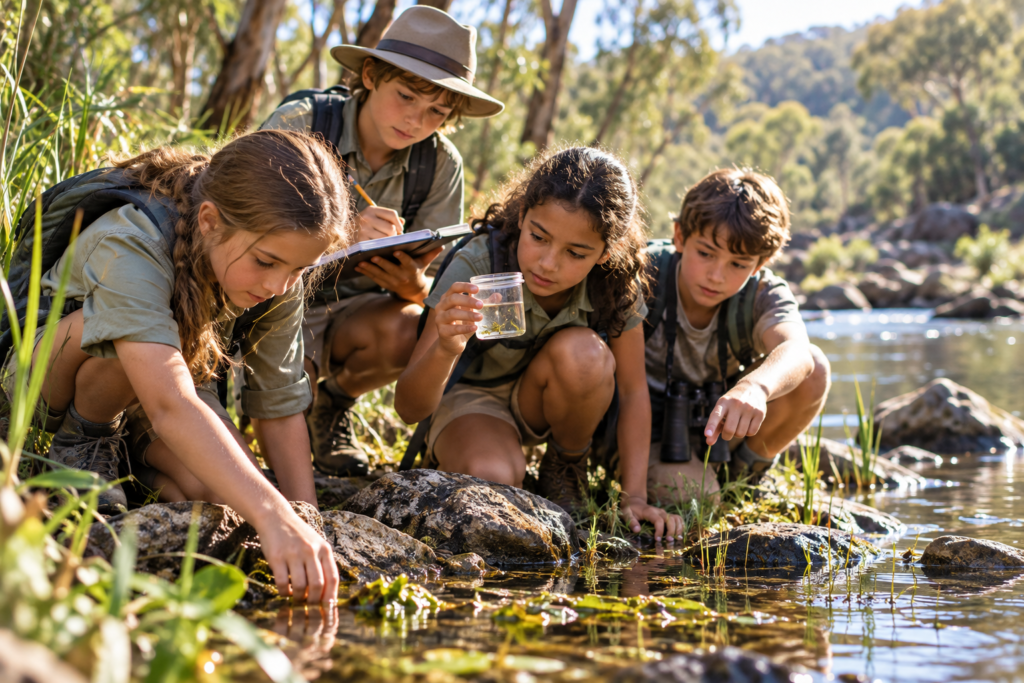
CONSERVATION INVESTIGATORS
Years 3–6
Students begin asking deeper questions, investigating ecosystems and conservation challenges, examining evidence and considering how knowledge, faith and responsibility can inform their choices.
Think • Investigate • Understand • Discern • Act
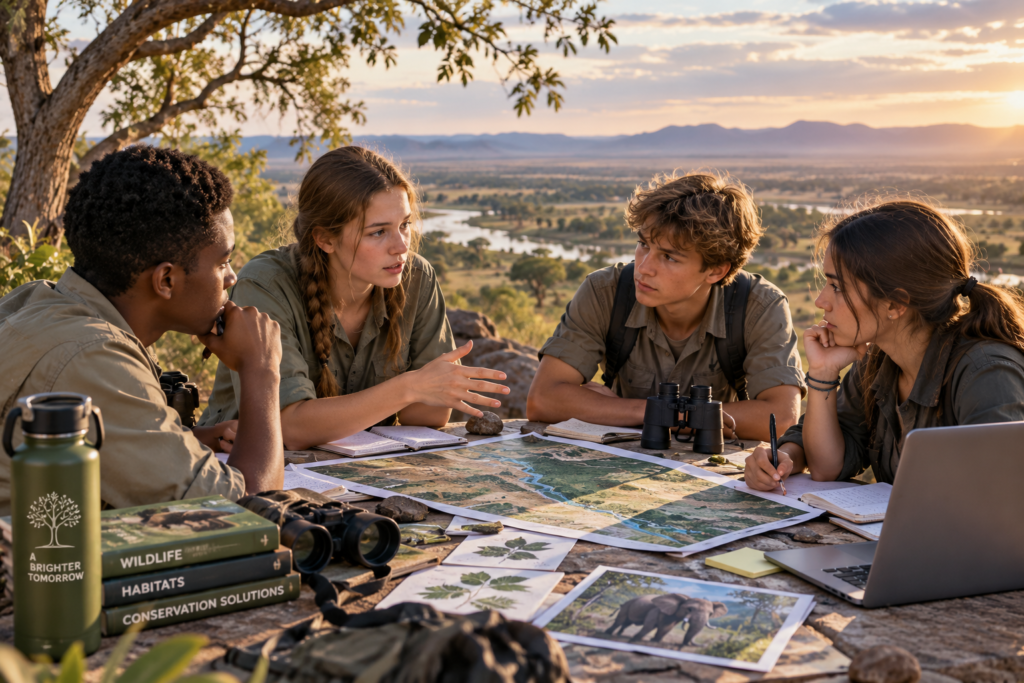
CONSERVATION CHANGEMAKERS
Years 7–9
Older students explore more complex conservation issues, consider different perspectives, weigh evidence and values, and develop thoughtful responses grounded in knowledge, discernment, compassion and responsibility.
Understand • Question • Discern • Collaborate • Design • Lead
EXPLORE → INVESTIGATE → DISCERN → CHANGE → LEAD → INSPIRE
From discovering creation to understanding their place within its future.
WHAT STUDENTS WILL EXPLORE
Learning about the world. Learning how to care for it.
Kids for Conservation takes students beyond simply learning the names of animals, habitats or environmental problems.
Students explore how the living world works, how people are connected to it, what happens when those relationships are disrupted — and how thoughtful, informed and compassionate choices can contribute to positive change.
THE LIVING WORLD
Explore habitats, ecosystems, biodiversity, food webs, adaptation and the relationships that connect living things.
WILDLIFE & CONSERVATION
Discover wildlife, the challenges species face and the different ways people work to protect animals and habitats.
PEOPLE & PLANET
Investigate how communities, resources, development and the environment are connected — and why conservation decisions can affect both people and nature.
SCIENCE & INVESTIGATION
Observe, question, investigate evidence and use scientific thinking to better understand the natural world.
FAITH & STEWARDSHIP
Explore creation, stewardship, compassion and responsibility through a Christian perspective.
DISCERNMENT & ACTION
Consider evidence, Scripture and different perspectives before deciding what a wise, responsible and meaningful response might be.
UNDERSTAND THE WORLD. CONSIDER YOUR RESPONSIBILITY. DECIDE HOW TO RESPOND.
Learning becomes powerful when students discover what they can do with what they know.
SCRIPTURE THAT CONTRIBUTES TO THE THINKING
Scripture is not decoration. It is part of the learning.
In the Christian Education Edition, Scripture is used to encourage reflection, deepen discussion and help students consider questions of stewardship, wisdom, compassion, responsibility and action.
Students are encouraged to consider Scripture alongside scientific evidence, observation and different perspectives — not as a replacement for investigation, but as another lens through which they can reflect on what they have discovered.
A passage might invite students to consider:
What does this teach us about creation?
What responsibility does it ask us to consider?
How might it influence the way we respond?
KNOWING WHAT IS HAPPENING IS ONLY THE BEGINNING.
What should we do with what we now know?
FROM LEARNING TO RESPONSE
A simple framework for faith-informed conservation learning
Kids for Conservation encourages students to move beyond simply knowing about a conservation issue. They investigate what is happening, consider what science can tell them, reflect on what faith may contribute, and use discernment to decide how they might respond.
The process does not prescribe the answer. It helps students develop the knowledge, judgement and confidence to reach thoughtful conclusions of their own.
1. THE SITUATION
What is happening?
Begin with a real wildlife, environmental or conservation issue. Observe what is happening and identify the questions it raises.
2. SCIENCE
What can we discover?
Investigate evidence, ecosystems, causes, consequences and different perspectives to build informed understanding.
3. SCRIPTURE
What might faith contribute?
Explore relevant Scripture and Christian principles such as stewardship, compassion, wisdom and responsibility.
04 — DISCERN
What should we consider?
Bring evidence, knowledge, faith and different perspectives together. Consider consequences, responsibilities and possible responses.
05 — RESPOND
What could we do?
Decide what meaningful action might look like — individually, as a class, within the school or in the wider community.
SCIENCE HELPS US UNDERSTAND.
FAITH ASKS US TO CONSIDER.
DISCERNMENT HELPS US CHOOSE.
ACTION ALLOWS US TO RESPOND.
Learn deeply. Think carefully. Choose wisely. Act meaningfully.
SEE IT IN PRACTICE
Pollinators are declining in a local environment.
1. THE SITUATION
Students notice or learn that fewer pollinators are being observed.
2. SCIENCE
They investigate pollination, biodiversity, habitat, food systems and possible causes of decline.

3. SCRIPTURE
They explore relevant Scripture and Christian principles of creation, stewardship, care and responsibility.

04 — DISCERN
They consider the evidence, different perspectives, possible consequences and what responsible action could look like.
05 — RESPOND
Students might improve habitat, plant appropriate native species, share what they have learned, or develop another evidence-informed response.
THE RESPONSE IS NOT PRESCRIBED.
Students investigate, discern and decide.
THE CHANGEMAKER JOURNEY
🔎 QUESTION
Notice something that needs attention.
What have we observed?
What question should we ask?
🔬 INVESTIGATE
Understand before acting.
Research. Observe. Gather evidence. Discover the relationships involved.
🧭 DISCERN
Consider the whole picture.
Bring together evidence, Scripture, different perspectives and possible consequences
❤️ LOVE
Let love influence the decision.
Consider people, wildlife, creation and future generations.
💡 DESIGN
Develop a responsible solution.
Turn understanding into an achievable plan.
🌱 ACT
Put the idea into practice.
Start. Participate. Serve. Collaborate. Make the change real.
📊 EVALUATE
Did it actually help?
Measure what changed, what worked and what could be improved.
📣 INFLUENCE
Share what you’ve learned.
Communicate the results, inspire others and help positive change grow.
Action with purpose.
A conservation project doesn’t have to be enormous to matter.
Students might restore habitat, improve biodiversity around their school, reduce waste, protect water, support wildlife, educate their community, advocate for a thoughtful solution or develop an entirely new idea of their own.
The goal isn’t simply to complete a project.
The goal is to develop the person capable of creating one.
Developing young people who investigate before reacting, listen before deciding, discern when answers are not obvious, and have the courage to turn understanding into meaningful action.
DESIGNED FOR CHRISTIAN EDUCATION
Created to teach. Designed to grow with them.
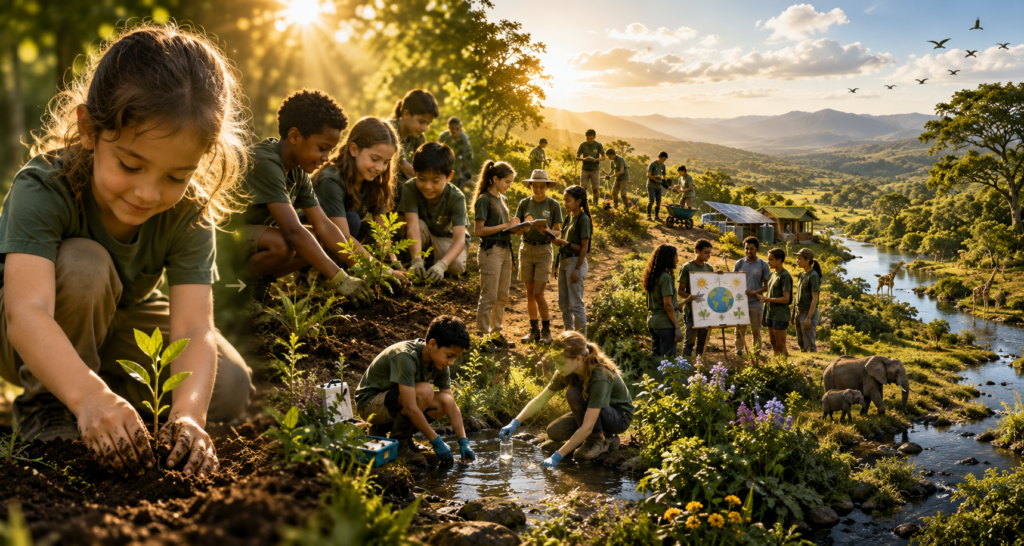
The Kids for Conservation Christian Education Edition is designed for young people from Foundation through Year 9, allowing conservation knowledge, Christian stewardship, discernment and student responsibility to deepen as children grow.
Built to support educators — not create more work for them.
Teachers already carry significant workloads. Kids for Conservation provides a structured foundation for meaningful conservation education, while giving educators flexibility to adapt learning to their students, school, community and environment.
Resources support:
Guided Learning • Teacher Preparation • Discussion • Field Investigation • Reflection • Assessment • Differentiated Learning • Conservation Projects • Student Leadership
Designed with curriculum-connected learning in mind.
For Australian schools, Kids for Conservation has been developed to support relevant areas of the Australian Curriculum, while strengthening capabilities including critical and creative thinking, scientific inquiry, ethical understanding, personal and social capability, literacy and sustainability thinking.
The Christian Education Edition extends that learning through:
Faith • Stewardship • Discernment • Compassion • Service • Leadership
Teach them to explore.
Equip them to investigate.
Help them discern.
Give them opportunities to act.
Watch them learn to lead.
BEYOND THE WORKBOOK
Learning doesn’t end on the last page.
The workbook may begin the journey.
But some of the most meaningful learning happens when students step outside, look at the world around them and realise that conservation is happening everywhere.
Kids for Conservation encourages young people to take what they have discovered into their school grounds, homes, churches and communities — observing their surroundings, identifying opportunities for positive change and putting their learning into practice.
From the page → to the person → to the place.
🌱 START WHERE YOU ARE
Students don’t need to travel to a rainforest, national park or wildlife reserve to become conservation changemakers.
Their investigation might begin with a tree in the schoolyard, insects beneath a log, birds visiting the playground, water leaving a drain, food being wasted, unnecessary plastic, a struggling garden or an area that could become wildlife habitat.
Then the question becomes:
“What is happening here — and what could we make better?”
Suddenly, their own school, church, backyard or community becomes a living classroom.
🌍 DISCOVER THE WORLD BEYOND YOUR OWN
Kids for Conservation also invites students to look beyond their immediate environment and discover conservation challenges facing wildlife and communities elsewhere in the world.
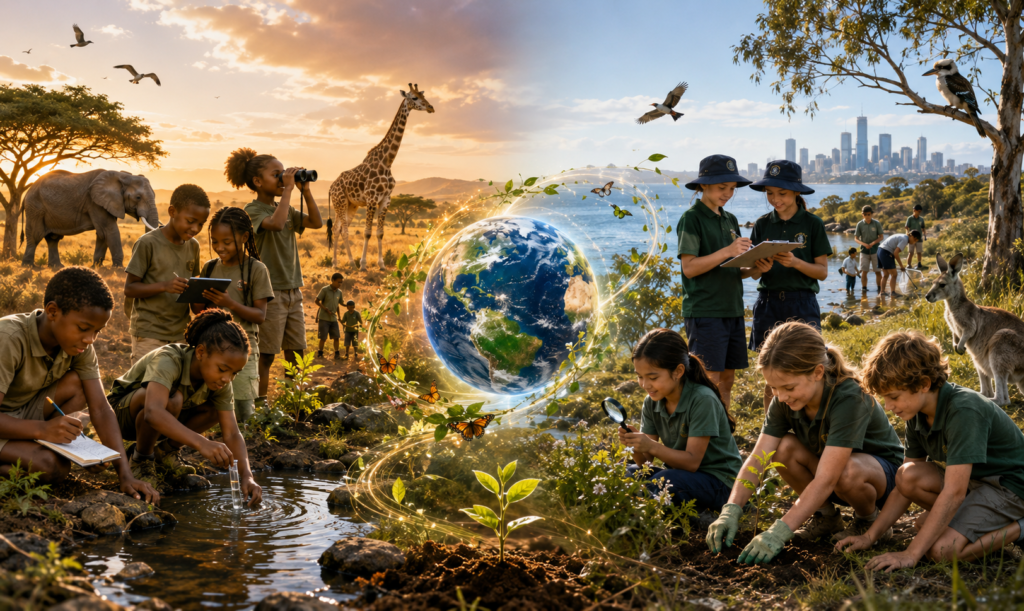
A child learning about habitat in Australia can begin to understand habitat loss in Zambia. A class investigating water use at school can explore why access to clean water matters elsewhere. Students studying wildlife conservation can discover how conservation decisions affect both wildlife and the people who live alongside it.
The landscapes may be different.
The species may be different.
The challenges may be different.
But stewardship, compassion, responsibility and service cross borders.
FROM ONE CLASSROOM TO ANOTHER WORLD
Kids for Conservation creates opportunities for students to discover how conservation is understood and experienced in different parts of the world.
Through the program, students can explore Zambia’s wildlife, ecosystems and conservation challenges while considering how these compare with their own environment and experiences.
Australian children are not learning how to “save Zambia.”
They are learning with Zambia.
Students in Zambia are exploring their own wildlife, ecosystems and conservation future through Kids for Conservation too.
This creates the opportunity for classrooms in different countries to share discoveries, questions, ideas and perspectives — recognising that each has something to learn and something to contribute.
THE LEARNING TRAVELS BOTH WAYS.
Different classrooms. Different environments. Equal voices.
❤️ EVERY CHILD HAS SOMETHING TO CONTRIBUTE
Not every child will become a scientist, conservationist or wildlife researcher — and they don’t need to.
Some will investigate and question.
Some will create and communicate.
Some will build, organise and solve problems.
Some will teach, serve and lead.
And some will quietly notice something that everybody else has missed.
Changemakers don’t all look the same.
Kids for Conservation helps young people recognise that their individual interests, abilities and gifts can contribute to something larger than themselves.
Conservation needs thinkers and doers. Scientists and storytellers. Researchers and artists. Organisers and innovators. Quiet observers and confident leaders.
There is no single way to become a changemaker.
THE QUESTION IS NOT “WHAT CAN EVERY CHILD DO?”
IT IS “WHAT CAN THIS CHILD CONTRIBUTE?”
“Each of you should use whatever gift you have received to serve others.” — 1 Peter 4:10
FAITH BECOMES POWERFUL WHEN IT BECOMES LIVED.
Stewardship is not simply something students learn about. It becomes something they practise — in the choices they make, the way they serve and the way they use what they have learned.
A GLOBAL GENERATION OF CHANGEMAKERS
A GLOBAL GENERATION OF CHANGEMAKERS
Different places. Different perspectives. One shared future.
ONE GENERATION. MANY VOICES. A SHARED CONSERVATION FUTURE.
THEIR CONSERVATION FUTURE
The future of conservation will belong to the generation that inherits it.
Our responsibility is to help prepare them for it.
We cannot know exactly what conservation challenges today’s young people will face in the decades ahead.
But we can help prepare them with the knowledge to understand, the curiosity to investigate, the faith and values to care, the discernment to choose wisely, and the confidence to act when their moment comes.
Kids for Conservation is not about handing young people responsibility for fixing everything previous generations have inherited.
It is about helping them become thoughtful, informed and compassionate people who are prepared to participate in the conservation future that will one day be theirs.
WE ARE NOT ASKING THEM TO CARRY THE FUTURE.
WE ARE PREPARING THEM TO MEET IT.
One class can learn.
One class can act.
One class can inspire another.
AND SOMEWHERE ALONG THE WAY,
A GENERATION BEGINS TO CHANGE.
THEIR CONSERVATION FUTURE.
The future of conservation will belong to the generation that inherits it. Our responsibility is to help prepare them for it.
BRING KIDS FOR CONSERVATION TO YOUR COMMUNITY
Whether you are a Christian school, church, children’s ministry, youth group or homeschool community, Kids for Conservation can provide a flexible pathway for young people to explore the living world through science, faith, stewardship and action.
You don’t need to know exactly how your community will participate before getting in touch.
Tell us a little about your learners, your setting and what you hope to achieve — and we can help you identify where to begin.
Registration simply helps us understand your community, age or year levels, location and how you may wish to participate.
Christian Schools • Churches • Children’s Ministries • Homeschool Communities • Educators
Education today. Conservation tomorrow.